2026-11-20 ·
Checking Dryer Vents in Older St. Louis Brick Homes
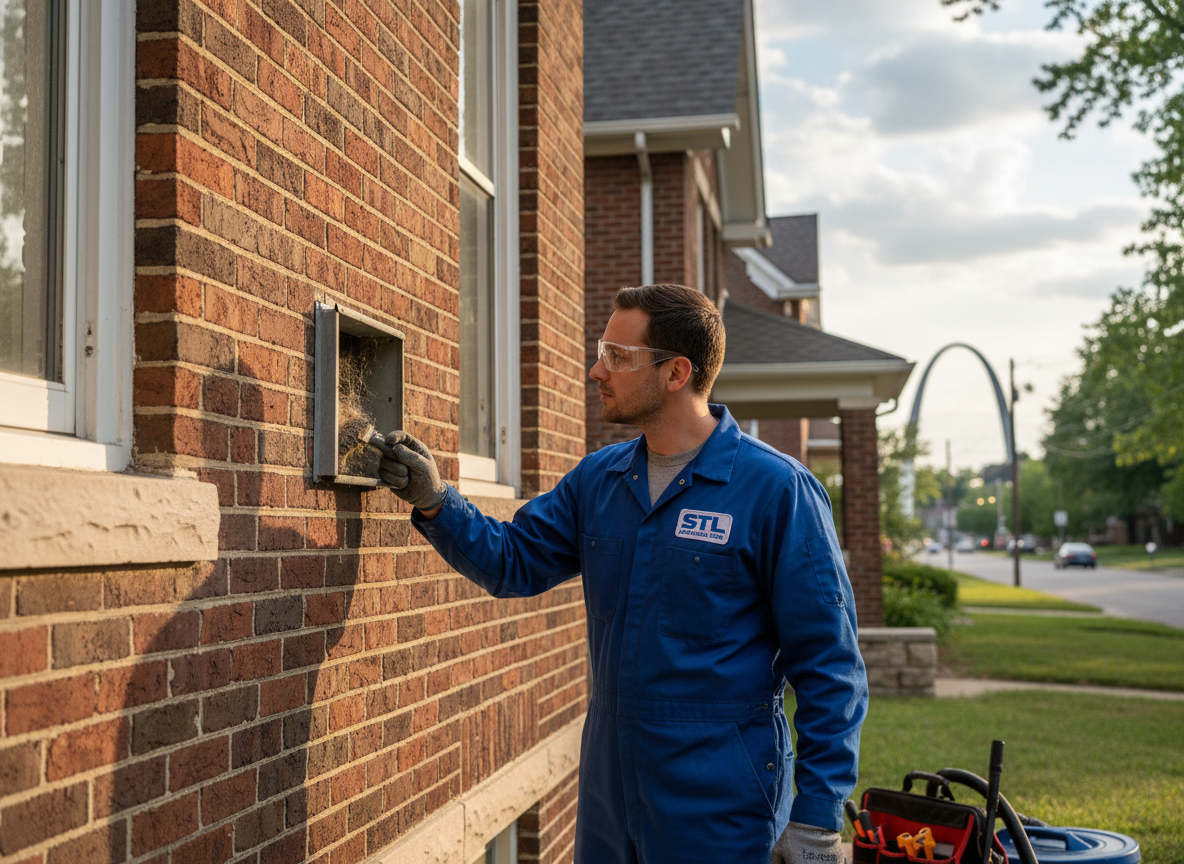
In older St. Louis brick homes, checking dryer vents starts with a visual inspection of the exterior termination cap and a full duct run test every 6 to 12 months. Brick walls in neighborhoods such as Soulard, The Hill, and Lafayette Square often route vents through narrow chases that trap lint faster than modern framed construction. Cold winters and frequent severe storms accelerate moisture and debris issues inside those lines.
Why Brick Construction Changes the Inspection
St. Louis brick homes built before 1950 typically feature 8-inch to 12-inch thick masonry walls that force vent ducts into tight 90-degree turns or vertical rises of 10 feet or more. These paths collect lint at elbows where airflow slows. Homeowners in Central West End and Benton Park report visible lint flakes at exterior grilles after heavy spring storms because wind-driven rain forces moisture back into the line. The humid continental climate brings hot summers that dry lint quickly into flammable layers, while winter freezes expand any trapped water and crack rigid metal elbows. Checking requires removing the dryer and using a 4-inch inspection camera rather than a simple mirror, because straight-line access rarely exists in these homes.
Seasonal Timing for St. Louis Conditions
Perform the check after the last severe storm of fall and again in late winter before temperatures rise. Tower Grove South and Shaw residents see increased blockages following summer thunderstorms that drop branches across roof vents. Cold snaps below 20 degrees cause condensation inside uninsulated ducts that run along exterior walls, turning loose lint into a wet paste that hardens. A practical routine includes disconnecting the dryer, vacuuming the first 6 feet of duct, and confirming the exterior flap opens fully with a leaf blower test at low speed. These steps address the actual moisture and wind loads common to the Independent City rather than generic advice.
Step-by-Step Check Process
- Unplug the dryer and pull it 3 feet from the wall.
- Disconnect the flexible transition hose and inspect for tears or crushed sections.
- Feed a dryer vent brush or camera through the wall duct while noting resistance points.
- At the exterior, verify the cap flap moves freely and the screen is clear of debris.
- Reassemble and run a 10-minute cycle with a vent airflow meter to confirm 1,200 cubic feet per minute or better.
Document any masonry penetrations that show mortar cracks, common in Delmar Loop and Forest Park Southeast homes where settling shifts the duct alignment.
When Professional Help Becomes Necessary
If the camera shows more than 20 percent blockage or the duct requires cutting into brick, contact a technician experienced with dryer repair in masonry structures. Homes near the Gateway Arch and Downtown often have shared vent stacks that complicate solo work. Severe storm damage may also require 24/7 appliance repair to restore safe operation before winter sets in. For seasonal preparation details, review preparing your washer for winter temperature swings in St. Louis as similar temperature swings affect dryer vent materials.