2026-11-20 ·
Clearing a Clogged Dishwasher Drain After Heavy Missouri Rains
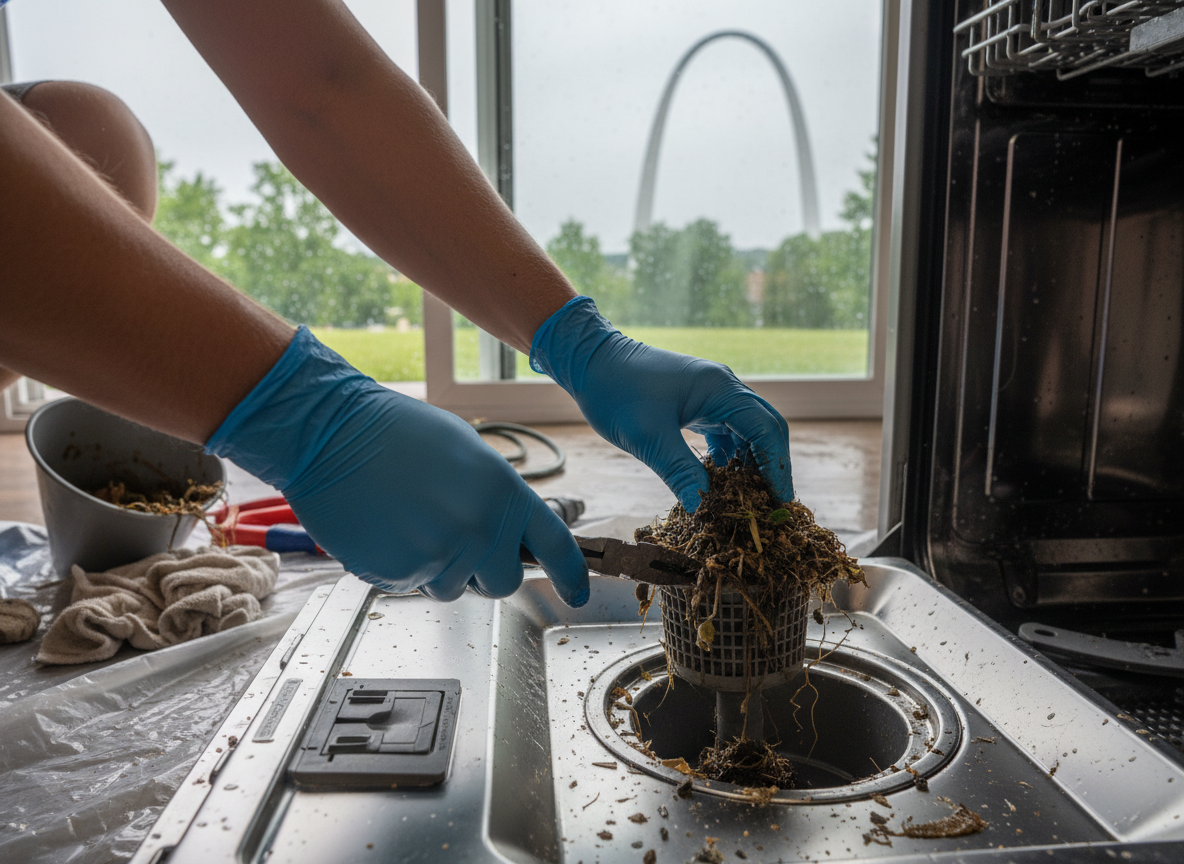
After heavy Missouri rains, clearing a clogged dishwasher drain in St. Louis homes usually takes 20-45 minutes when the issue stems from surface debris washed in through floor drains or vents, though older plumbing in brick buildings can extend that to 1-2 hours if sediment has settled deeper.
Why Heavy Rains Trigger Dishwasher Drain Clogs in St. Louis
St. Louis sits in a humid continental climate where severe storms dump several inches of rain in hours, overwhelming older combined sewer systems that serve neighborhoods such as Soulard, Benton Park, and Lafayette Square. Many homes built before 1950 still use cast-iron or clay pipes that collect silt, leaves, and grease during these events. Water backs up through basement floor drains and enters the dishwasher's air gap or drain hose, carrying fine sediment that settles in the 90-degree elbow under the sink. In areas like The Hill and Shaw, tree roots from mature oaks and maples often infiltrate cracked lines, turning a simple rain event into a recurring clog. Downtown and Midtown properties with shared laterals face the same pressure when stormwater surges push material from the main into individual service lines. The result is standing water in the dishwasher tub that smells sour within a day and prevents the unit from completing cycles.
Common Signs of Rain-Related Clogs
Homeowners in Tower Grove South and Forest Park Southeast notice water pooling at the bottom of the dishwasher after a storm, even when the sink drains normally. A gurgling sound from the air gap during the drain cycle indicates air trapped by partial blockage. In Central West End and Delmar Loop apartments, the smell of sewage rises through the unit after heavy rain because the clog sits downstream of the P-trap. If the dishwasher runs but leaves a film on dishes, fine silt from stormwater has likely coated the spray arms. These symptoms differ from everyday grease clogs because they appear suddenly after rainfall rather than gradually over weeks.
Step-by-Step Clearing Process
Begin by unplugging the dishwasher and removing the lower rack to access the sump area. Remove the filter screen and clean out any visible leaves or mud that entered during the storm. Next, disconnect the drain hose at the sink connection and flush it with a bucket of hot water mixed with one cup of white vinegar to loosen sediment. For deeper blockages common in Shaw and Carondelet homes, use a 25-foot manual drain snake inserted through the air gap fitting, rotating slowly to avoid damaging older pipes. Run a short cycle with a dishwasher cleaner tablet afterward to flush remaining particles. Always test the unit on the shortest rinse cycle before reloading dishes. These steps address the majority of rain-induced clogs without chemicals that could harm aging plumbing.
When Professional Help Is Needed
If the clog returns within 48 hours or water backs up into multiple fixtures, the issue likely lies in the main line shared by several homes in Lafayette Square or University City. At that point, contact a technician for camera inspection rather than repeated DIY attempts that can crack brittle pipes. Emergency appliance repair teams familiar with St. Louis brick construction can isolate whether the dishwasher drain or the house lateral is the culprit. Persistent issues after storms also warrant checking the garbage disposal connection, as many older homes route dishwasher drains through the disposal unit.
Preventing Future Storm-Related Issues
Install a backflow preventer on the dishwasher drain line if your home sits in a low-lying block of Benton Park or Soulard where combined sewers surcharge regularly. Clean the air gap monthly and avoid running the dishwasher during active thunderstorms. For homes near Forest Park or the Missouri Botanical Garden where clay soil shifts with freeze-thaw cycles, schedule an annual camera inspection of the lateral to catch root intrusion before the next heavy rain season. These habits reduce repeat service calls in neighborhoods with similar housing stock.