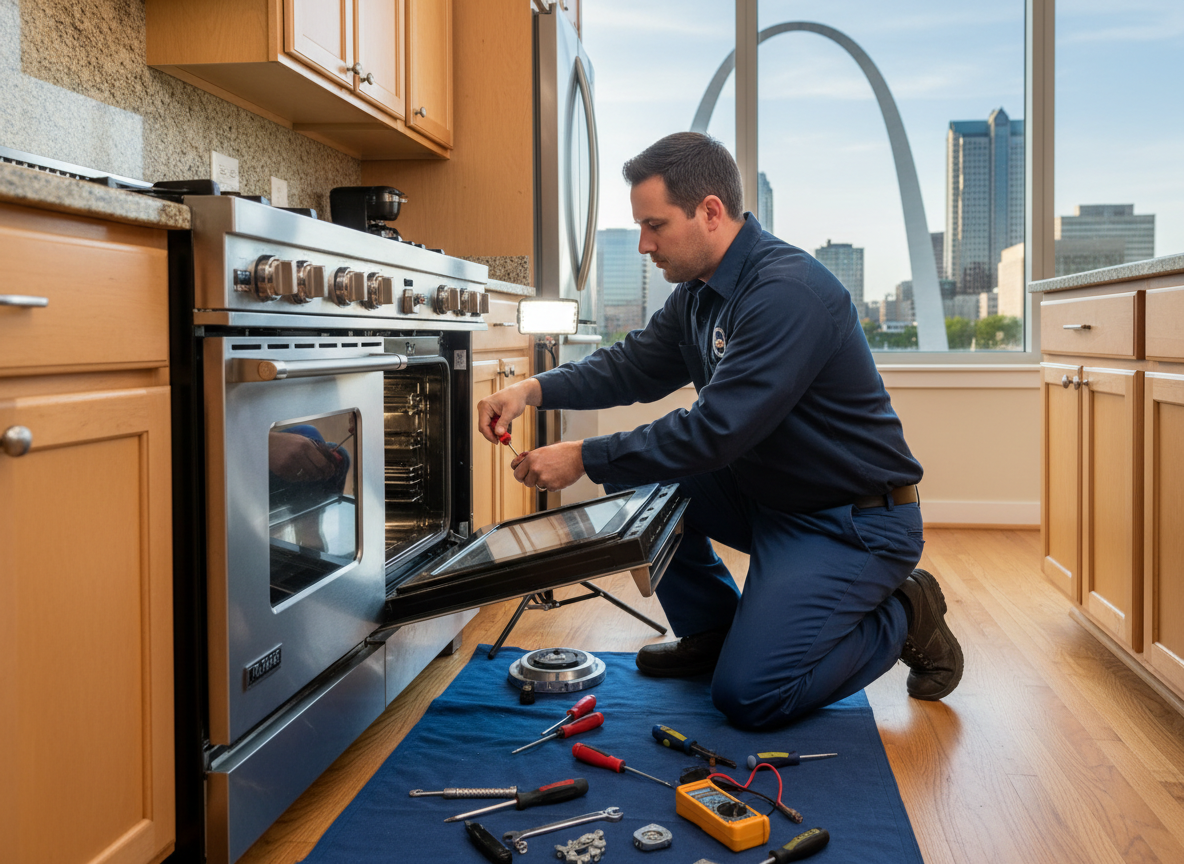
St. Louis homes built before 1950 in neighborhoods such as Soulard, Lafayette Square, and The Hill often feature original gas lines and wiring that complicate modern oven repairs. Frequent severe storms bring power surges that damage electronic ignition modules and control boards on both gas and electric ranges. Technicians must check for corrosion on terminals caused by the region's humid summers before replacing parts, as moisture trapped in older cabinetry accelerates failure. Working in these tight kitchens requires protecting finished floors and confirming proper venting to avoid carbon monoxide risks in tightly sealed row houses.
Electric stoves in Midtown and Forest Park Southeast apartments commonly fail at the bake element or broil element after years of heavy use during cold winters. Gas stoves in Carondelet and Tower Grove South see issues with igniters that crack from repeated thermal cycling during humid continental weather swings. Repair calls frequently involve confirming that the home's 120-volt or 240-volt supply matches the unit's requirements, especially in converted buildings where circuits were added without permits. Proper diagnosis prevents unnecessary full replacements when a single component fails.
Downtown and Shaw residents with vintage ranges from the 1960s and 1970s often need door gasket replacements and thermostat recalibration to restore even baking. Severe summer storms can trip breakers that leave units in inconsistent states, requiring full system resets and safety checks. Technicians carry common elements, valves, and sensors for brands frequently found in these older properties to complete repairs without multiple trips across the independent city.
Technician insight
In St. Louis, the thing that catches most people out with Oven And Stove Repair is older knob-and-tube wiring in Central West End and Shaw homes that cannot handle modern element loads after a storm surge, leading to repeated breaker trips if the circuit is not upgraded during the job.
Igniter Failure After Power Surge
A gas range in a Benton Park row house stopped lighting after a severe thunderstorm. Inspection revealed a cracked igniter and tripped GFCI from the surge. The igniter was replaced and the circuit tested for proper grounding before restoring full function.
How it works
- 1
Initial Assessment
Technician arrives and inspects the oven or stove for visible damage, tests power or gas supply, and identifies error codes.
- 2
Diagnosis
Components are tested individually to isolate the failure, checking elements, igniters, valves, and control boards against local voltage conditions.
- 3
Repair Execution
Faulty parts are replaced using manufacturer-approved components, followed by calibration and safety verification.
- 4
Final Testing
Full operation is confirmed across all functions with the homeowner present before cleanup and departure.
Pricing
Upfront quotes provided after diagnosis with no hidden fees.